Well, it’s safe to say that it’s been a while since wheat was the biggest winner, and soybeans were the biggest loser in the grain markets on a weekly basis. Ironically, March wheat and March corn both made new lows to start the week before ultimately trading higher, while January soybeans traded sharply higher Tuesday, and closed lower each successive day of the week. Export sales performance for American grain was strong this week, with the exception of soybean meal. As we approach the turn of the calendar year, the focus will shift toward South American weather events, and production estimates. Domestic export performance will be important, but is expected to be at its strongest amid the South American growing season.
Corn:
Corn bulls will head into the weekend with their heads held high. The March corn contract exuded a lot of strength following the roll out of the December contract. After hammering in a new low early Wednesday morning, corn bulls regained control of the market and didn’t look back. Wednesday’s low came about an hour after the open at 470 ½, while the weekly high came in around 11:30 on Friday 19 cents higher at 489 ½. Prices ultimately accelerated higher following Thursday morning’s export sales report, with corn sales’ significant beat to the upside amassing 1.928 million tonnes (0.6-1.2 MT range of expectations). For the week, March corn settled a modest 2 ¼ cents higher at 484 ¾. But, it certainly feels like the tides are turning. After closing the week ¾ of a cent above our pivot pocket, bulls will have their work cut out for them. In order to retest the psychologically significant 500 handle, they will need to clear 4-star resistance between 493 and 496 ½. If the late week’s strength carries over next week, short covering could be a catalyst. Managed funds have amassed their largest net-short position of any period in the last 3 months, totaling 206,478 contracts. Broken down, that’s a staggering 362,537 short positions compared to 156,059 long positions.


Soybeans:
For the first time in a very long time, soybeans were the biggest loser in terms of weekly price action within the grain complex. It’d be remiss not to chalk up some of the weakness in January beans to the recent sell-off that we’ve seen in soybean meal. For the week, January meal prices were 4.9% lower, and were the only reported component of Thursday’s export sales report to come in below expectations. Meanwhile, soybean exports came in at 1.895 million tonnes, which was notably higher than expected. Another contributing factor to the late week weakness in January soybeans is the anticipation of rain coming to Central Brazil next week. Ultimately, January soybeans settled the week 5 ¾ cents lower at 1325. If bulls can defend 3-star support between 1323 and 1327 to begin next week, they’ll have to work their way back to our 1346-1350 pivot pocket. Managed money funds maintain their modest bullish bets with a net-long position of 57,652 contracts, and if rain fails to materialize in Brazil over the weekend, we may have a strong opening to next week.


Wheat:
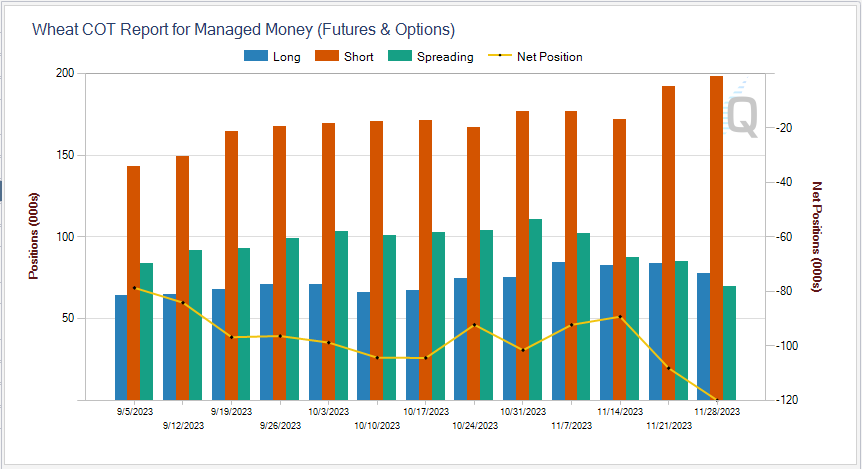
Is it time for wheat bulls to queue up the Rocky theme song? March wheat was the biggest winner of the grain complex for the first time in seemingly an eternity, and closed above the psychologically significant 600 handle to finish the week. Traders far and wide have called 15+ of the last 1 bottoms, but is this it? This week’s price action is certainly encouraging, but there’s still plenty of ground to recoup before we can say that a bottom is in confidently. The first step will come in clearing 3-star resistance between 604 and 608 ½. We flirted with that on Friday, with the daily high coming in at 610, but ultimately settled the week at 601 ¾. Further price strength could have bears running for the hills as managed funds have amassed their largest net-short in months with a total of 119,986 contracts. Broken down, that is 197,851 short positions compared to just 77,865 contracts.